
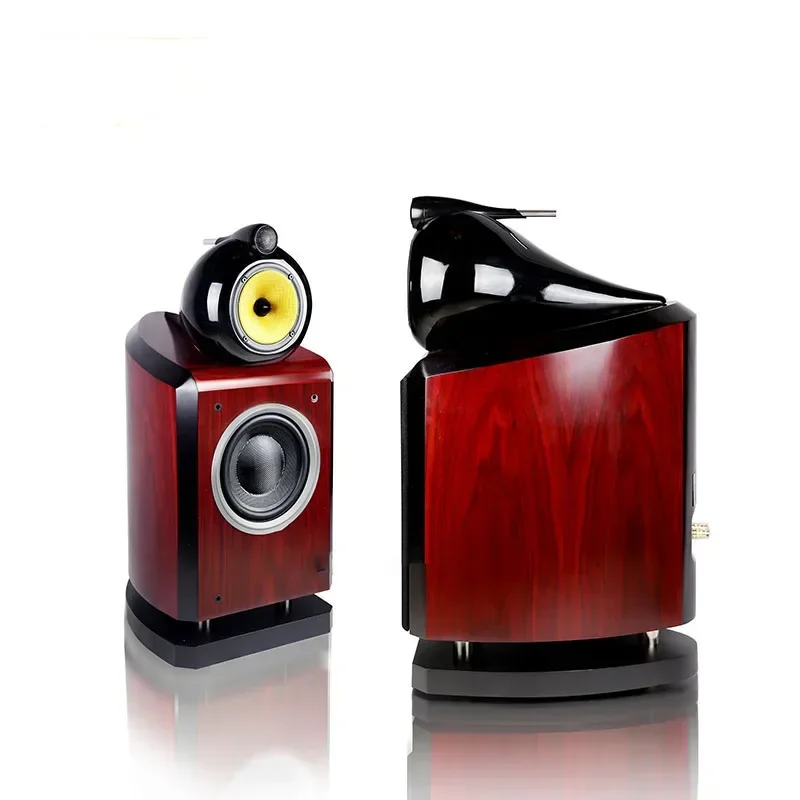


You know that moment when your playlist is doing everything right, but the sound still feels a little flat—like the room is holding it back? If you’ve been chasing that bigger, more “live” presentation at home, a serious passive speaker setup can be the missing piece.
Three Drivers, One Goal: Full-Range Home Hi‑Fi
The Nautilus M3 is positioned as a high-fidelity, high-end bookshelf passive speaker with a three-way design. Here’s the thing — a three-way configuration is typically chosen when the goal is to divide the workload across dedicated drivers, aiming for clearer separation from bass through mids to treble. Add the “Bass Fever-grade” marketing angle and the overall pitch becomes pretty clear: this 150W 8-inch home floor speaker wants to deliver weight and authority, not just background sound.
And because it’s a passive speaker, your amplifier choice matters. Pairing the Nautilus M3 with a capable amp is what turns the spec sheet into real-world output, especially if you like listening with dynamics and headroom.
The Numbers That Actually Matter
If you’re comparing hi-fi high-fidelity passive speakers, these are the details that help narrow the field:
- Power output: 150W
- Speaker size: 8-inch
- Configuration: Three-way
- Impedance: 6 Ohm
For what it’s worth, that 6 Ohm impedance is a practical detail to keep in mind when matching amplification. Not every amp behaves the same way with lower-impedance loads, and it’s worth ensuring your setup is comfortable driving 6 Ohm speakers if you plan to push volume.
Where This Nautilus M3 Speaker Shines
Honestly, the appeal of the Nautilus M3 three-way bass-focused hi-fi speaker comes down to its intent. It’s not marketed as a minimalist desktop box; it reads like a “serious listening” component for a home system.
But the most compelling part is the combination of an 8-inch driver with a three-way layout. If your listening leans into bass-heavy genres or you simply want more foundation under vocals and instruments, this 8-inch passive speaker format is a logical direction. The “high-end bookshelf” positioning also suggests it’s meant to sit in a more curated audio setup—something you choose deliberately, not an afterthought.
A Couple Small Reality Checks Before You Buy
Fair warning: this is a passive speaker, so you’ll need an external amplifier (and the right cabling) to get it running. That’s not a flaw—just part of the deal, and it can be a plus if you like choosing your own electronics.
Quick note: the listing doesn’t go into sensitivity, frequency response, or cabinet details, which are specs many shoppers like for side-by-side comparisons. If those numbers are important for your room and amp pairing, it’s worth asking the seller before ordering.
Making Sense of “Bookshelf” Meets “Home Floor Speaker”
The name blends “home floor speaker” with “high-end bookshelf,” and that can raise an eyebrow—so what should you expect? Real talk: treat it as a home hi-fi passive speaker designed for a dedicated spot in your listening space, rather than something meant to disappear. If you’re building a stereo setup and want an 8-inch three-way speaker with a bass-forward angle, the Nautilus M3 fits that brief on paper.
If this kind of Nautilus M3 hi-fi high-fidelity passive speaker sounds like what your room has been missing, consider it as a centerpiece for a system you’ll actually look forward to using every day.



Reviews
There are no reviews yet.