

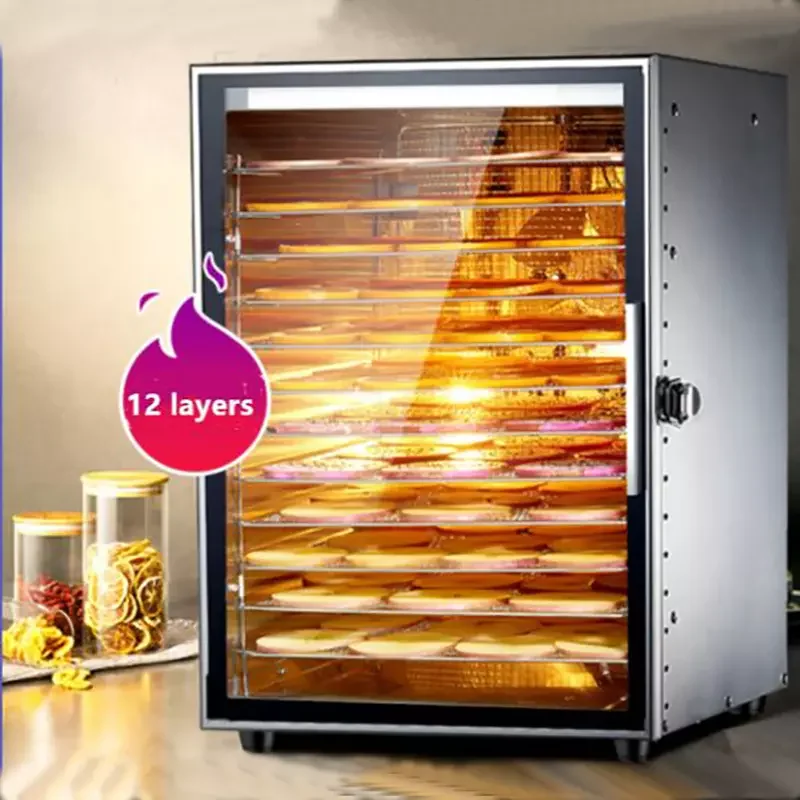




Ever find yourself staring at a pile of ripe fruit or extra veggies and thinking, “I’m not going to finish all this in time, am I?” If you like the idea of turning fresh produce into shelf-stable snacks (or stocking up on treats for pets), a food dehydrator can be a surprisingly practical countertop workhorse.
Stainless Steel, Commercial Vibes, Home-Friendly Use
This dry fruit machine is presented as a commercial stainless steel food dryer, which usually signals a focus on durability and easy wipe-down cleanup. Stainless steel is a sensible pick for a fruit dryer because it tends to handle repeated use well and doesn’t feel precious—you can make dried vegetables today and pet snacks tomorrow without babying the exterior.
And while it’s labeled for commercial use, nothing stops home users from taking advantage of that more heavy-duty positioning. If you dehydrate regularly, the “commercial” tag may be exactly what you’re looking for.
The Specs That Actually Matter Before You Buy
Here’s the thing — dehydrators can look similar in photos, so the practical details are what help you decide if it fits your setup and goals. Based on the listing’s spec sheet, these are the points worth paying attention to:
- Voltage options: 220V/110V (helpful if you’re matching the unit to your local power standard)
- Material: Stainless steel
- Intended applications: Drying fruits, dried vegetables, and pet snacks
- Use case: Commercial use is supported
If you’ve been shopping for a fruit dryer or food dehydration dryer specifically for mixed batches—fruit one day, dried vegetables the next—this positioning is straightforward and to the point.
Snacks for You, Snacks for Them
One of the most appealing parts of a dedicated food dehydration dryer is how it broadens your snack options. Dried fruit is the obvious classic, but dried vegetables can be just as handy for soups, meal prep, and quick add-ins. Then there’s pet snacks: having a machine that openly includes that application makes it clear the seller expects people to use it beyond human trail mixes.
Honestly, if you’re already making homemade snacks, a stainless steel food dryer like this can help you keep things consistent across different ingredients. But ask yourself: are you planning to dehydrate often enough to justify a dedicated dry fruit machine, or is this more of an occasional project?
A Couple of Real-World Caveats to Keep in Mind
That said, there are a few details you may want to confirm before ordering. The listing doesn’t spell out the unit’s dimensions or power consumption, which matters if you’re trying to plan counter space or estimate energy use. Also, because it supports 220V/110V, you’ll want to make sure you select the correct voltage for your region so setup is straightforward.
If the idea of making dried fruit, dried vegetables, or pet snacks at home (or for higher-volume use) sounds like your kind of routine, this commercial-style fruit dryer is worth a closer look. Take a moment to double-check the voltage choice and any space requirements with the seller, and you’ll be in a better spot to decide.




Reviews
There are no reviews yet.